News & Events Details
Aug
REG Strengthens Fire Safety Preparedness Through Staff Training
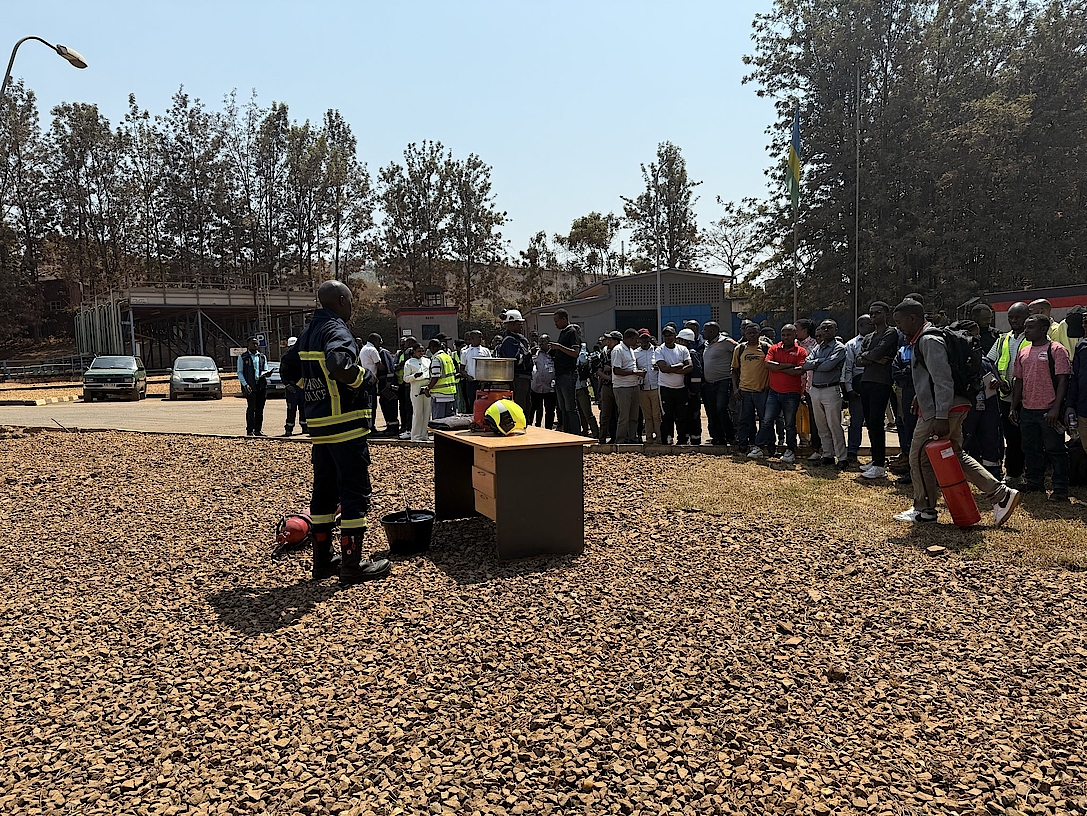
Kigali, 14 August 2026 — Rwanda Energy Group in partnership with the Ministry of Interior and the Rwanda National Police, has trained more than 100 employees on fire prevention, emergency preparedness and appropriate response measures in the event of a fire.
The training brought together staff from all 33 REG branches, as well as employees working at REG Headquarters, warehouses, power plants and substations. The initiative was aimed at strengthening employees’ knowledge and practical skills to prevent fires and take appropriate and timely action when a fire occurs.
The training forms part of REG’s commitment to promoting a safe working environment and strengthening preparedness across its facilities. It also supports Rwanda’s broader efforts to enhance fire prevention and emergency response capacity among employees and institutions.
Participants were introduced to key fire prevention measures, emergency response procedures and the appropriate actions to take during a fire incident. Practical knowledge on fire-fighting equipment and responding to emergencies was also emphasized, enabling staff to better protect themselves, their colleagues and property.
Speaking during the training, Francis Nkwaya, Security Coordinator at Rwanda Energy Group, emphasized the importance of ensuring that employees are equipped with practical knowledge that can be applied both at work and at home.
“Fire safety is everyone’s responsibility. Having the knowledge to prevent a fire and knowing what to do in the first moments of an emergency can save lives, protect property and reduce the impact of a fire. We want our employees to be prepared not only in their workplaces, but also in their homes and communities.”
The training was particularly relevant given the diverse working environments of REG employees, including power plants, substations, warehouses, offices and other electricity infrastructure facilities, where effective emergency preparedness is essential.
Juliet Kabatesi, one of the participants, said the practical session on using different fire-safety tools was particularly important because some of the equipment is commonly available in offices, but employees may not always know how to use it properly in an emergency.
“The training was important because we learned how to use different fire-safety tools. Some of these tools are available in our offices, but we had not mastered how to use them in case of an emergency. Now we have a better understanding of how to use them when needed.”
Through initiatives such as this, REG continues to promote a culture of safety, preparedness and collective responsibility among its workforce.
Categories
Archives
- September 2026
- August 2026
- July 2026
- June 2026
- May 2026
- April 2026
- March 2026
- February 2026
- January 2026
- December 2025
- November 2025
- October 2025
- September 2025
- August 2025
- July 2025
- June 2025
- May 2025
- April 2025
- March 2025
- January 2025
- December 2024
- November 2024
- October 2024
- September 2024
- July 2024
- May 2024
- April 2024
- March 2024
- August 2023
- July 2023
- June 2023
- May 2023
- April 2023
- February 2023
- December 2022
- August 2022
- July 2022
- June 2022
- May 2022
- April 2022
- March 2022
- February 2022
- January 2022
- December 2021
- November 2021
- September 2021
- August 2021
- July 2021
- June 2021
- May 2021
- April 2021
- February 2021
- January 2021
- December 2020
- November 2020
- October 2020
- September 2020
- August 2020
- July 2020
- June 2020
- April 2020
- March 2020
- February 2020
- January 2020
- December 2019
- November 2019
- October 2019
- September 2019
- August 2019
- July 2019
- June 2019
- May 2019
- April 2019
- March 2019
- February 2019
- January 2019
- December 2018
- November 2018
- October 2018
- September 2018
- July 2018
- June 2018
- April 2018
- March 2018
- February 2018
- January 2018
- December 2017
- November 2017
- August 2017
- July 2017
- June 2017
- March 2017
- February 2017
- January 2017
- December 2016
- November 2016
- August 2016
- July 2016
- June 2016
- April 2016
- February 2016
- May 2015
- April 2015
- March 2015
- January 2015
- December 2014
- August 2014
- July 2014
Related News

Ikipe ya REG VolleyBall Club yegukanye igikombe cy’irushanwa...

Customer Service Week 2026: REG Reaffirms Its Commitment to...

Abasenateri bashimye ko kugeza amashanyarazi ku baturage...

REG Women BBC Secure Third Consecutive Basketball League...

REG Participated in Australia–Africa Clean Energy Conference...
Our Partners



















Please fill in the form or Call us on our Toll free number 2727